

How to Craft Content That Captures the C-Suite’s Attention for Complex Manufacturing Solutions
RHBlake’s B2B Manufacturing Buying Journey Study Reveals New Insights
For B2B manufacturers selling sophisticated, high-value technical solutions, the buying journey is complex, lengthy and filled with highly influential decision-makers. While marketing teams often focus their content on the primary buying personas—the engineers and directors of operations who deal with day-to-day equipment—they frequently overlook the specialized needs of the C-level executive.
Research into the buying journey for complex solutions reveals that 78% of buyers feel the C-level is highly or extremely influential in the final purchasing decision. Not focusing enough attention on this critical audience means missing the chance to influence the most powerful stakeholders on competitive advantage, return on risk and long-term strategy.
Let’s explore why personalized thought leadership is vital for C-level engagement, drawing insights from a successful strategy developed for Hitachi Energy Advisory Services.
Earning Executive Attention: Aligning Content with C-Suite Priorities
Too many manufacturing marketers make the mistake of creating content for one audience and hoping it resonates with multiple audiences. While a general message might suffice for operational roles, it will not work for the C-suite.
C-level executives—are responsible for maximizing margin, ensuring uninterrupted operations and meeting production goals. They need assurance that unexpected failures will not disrupt operations or profitability. Critically, C-suite leaders are focused on a longer-time horizon. They are concerned not just with outcomes for the next quarter, but for the next three to five years.
Their concerns are global and strategic:
- geopolitical events
- weather events
- mergers and acquisitions
- supply chain disruptions
- economic uncertainty from tariffs and trade wars
- long-term planning
Therefore, content targeted at this audience must be aligned with these broader concerns and address how a solution impacts the business strategically over the long-term.
The power of personalized, strategic content is undeniable: 84% of C-level leaders in an RH Blake study reported that they purchased or started working with an organization because they produced thought leadership content. This content must be differentiated, leveraging strong research data and focusing on long-term value, competitive advantage, and risk mitigation.
RH Blake Case Study: Hitachi Energy – From Service Provider to Strategic Partner
Hitachi Energy wanted to move beyond its reputation as a transformer manufacturer and maintenance provider. The company saw an opportunity to offer a higher-value service: Advisory Services—a consultative offering designed for executive decision-makers managing critical energy infrastructure.
The challenge was to reposition from selling labor hours and maintenance contracts to providing enterprise-level strategic expertise.
Context: Critical Infrastructure and C-Suite Concerns
Hitachi Energy’s target audience operated high-voltage transformer fleets where uptime was non-negotiable.
Their pain points included:
-
- Managing aging infrastructure from multiple OEMs
- Replacement lead times measured in years
- Limited internal engineering resources
- Pressure to increase capacity without adding assets
Solution: Defining a C-Suite-Focused Value Proposition
Hitachi Energy Advisory Services was positioned as a vendor-agnostic, white-glove consulting engagement—providing customized diagnostics, action plans, and risk-reduction strategies.
This shifted conversations from “maintenance spend” to “strategic asset management.”
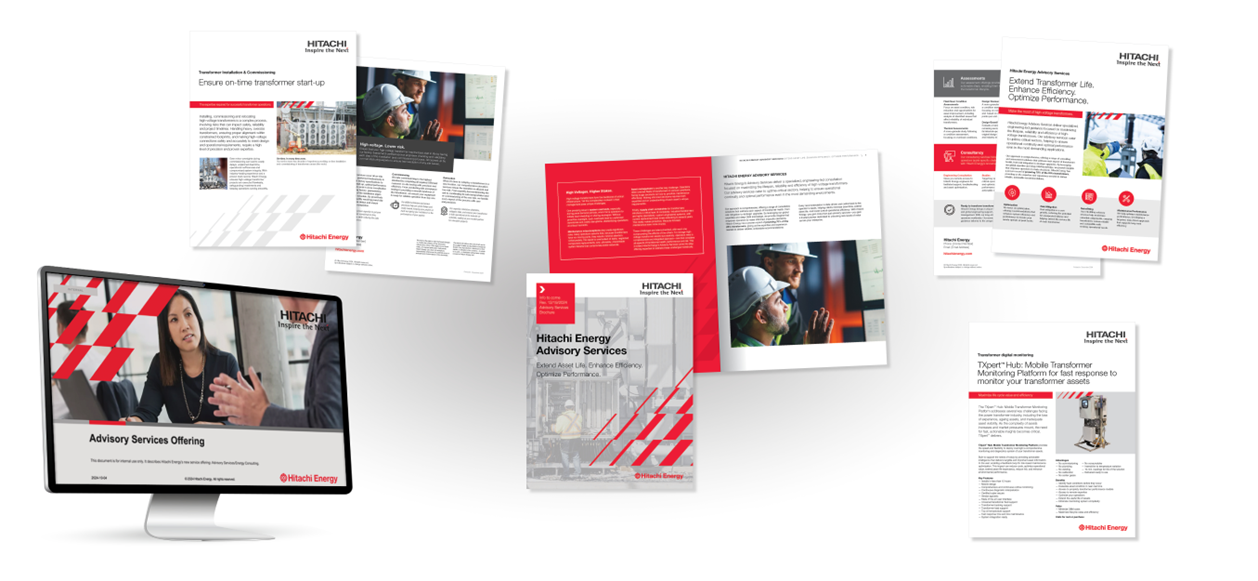
Defining the Consultative Value Proposition
To capture C-level attention, the new offering—Hitachi Energy Advisory Services—was meticulously defined as a specialized, expert consulting service.
Unlike traditional service offerings, this engagement is a discrete, customized consultation delivered in a white-glove approach. The deliverable is not a maintenance contract or a service agreement. The customer is buying vendor-agnostic, expert advice in the form of recommendations, customized action plans and actionable insights.
The core value proposition was structured around four primary strategic areas that directly appeal to the C-suite’s mandate for long-term health and profitability:
- Optimization: Focuses on maximizing value from existing infrastructure investments and increasing capacity through targeted upgrades. This extends asset life throughout the entire life cycle and optimizes performance.
- Risk Mitigation: Conducts in-depth analysis of potential vulnerabilities and provides tailored risk-mitigation strategies. The core focus is prioritizing actions to reduce the risk of system failures, thereby maximizing uptime and a continuous flow of electrical power.
- Retrofitting: Delivers guidance on how to increase the capability or capacity of existing units through targeted upgrades, helping businesses keep up with new technology, industry standards, and resilience requirements.
- Maintenance Performance: Provides recommendations on preventative measures and customizes maintenance programs based on the actual condition of assets, moving beyond basic activities to full system upgrades.
Aligning Messaging with C-Level Pain Points
To ensure the content resonated, messaging was tailored to directly address the financial and operational stressors keeping senior leaders awake at night.
1. The Cost of Failure and Downtime
The greatest concern for C-level executives is the fear of unexpected transformer failures leading to unplanned downtime or safety hazards. Prolonged downtime carries significant financial and reputational costs. The Advisory Services message addressed this by focusing on mitigating risk and preventing catastrophic failures through early detection and predictive analytics.
2. ROI and Budget Constraints
VP-level executives must ensure that any investment provides a clear ROI justification. Hitachi Energy’s strategy demonstrated that, while there is an upfront investment, the services are designed to deliver significant long-term value by preventing costly failures, improving performance (leading to energy savings), and optimizing maintenance schedules based on asset condition. This helps address the challenge of balancing shrinking maintenance budgets with the need to upgrade aging infrastructure.
3. Supply Chain and Aging Infrastructure
With urbanization and grid modernization increasing the demand for advanced transformers, businesses are struggling to manage aging fleets from multiple OEMs. The severe supply chain constraints mean that replacing units is often impossible in the short term, as lead times are measured in years.
The Advisory Services message focused on using existing assets by offering guidance on how to increase the capability of existing units through targeted upgrades. This approach allows companies to maximize value from existing investments.
4. Specialized Expertise and Objectivity
One major competitive advantage leveraged in the C-suite messaging was deep OEM expertise. While internal engineers possess institutional knowledge, they may lack the specialized, broader perspective necessary for complex fleet management.
Hitachi Energy emphasized its position as the world’s largest transformer OEM, possessing detailed historical design knowledge for nearly 70% of the installed base of large power transformers in North America. This includes critical proprietary design information for legacy brands like Westinghouse, GE, and ABB.
Crucially, the offering is presented as an objective, third-party assessment. This allows C-level executives to receive an independent, unbiased review of their assets, free from internal biases or constraints.
Conclusion: Elevating Conversations to the Boardroom
By recognizing that C-level executives require personalized content focused on long-term outcomes, risk mitigation, and competitive advantage, Hitachi Energy successfully aligned its Advisory Services as a strategic, integrated offering.
The consultative sales model and corresponding content strategy elevated the conversation from transactional maintenance to enterprise resilience. For marketers selling complex solutions, the lesson is clear: your C-suite content must focus on the strategic horizon—connecting technical needs to the financial and operational longevity of the enterprise.
Looking for help marketing your complex manufacturing solution? Contact RH Blake, a top manufacturing marketing agency with a strategy first approach.